What I did
I owned the brand side of the work rather than the concept. Concretely:
I wrote and defended the brand brief, including the decision to keep the campaign in the serious, low-saturation register rather than the bright, friendly category default. Distinctiveness in this category is available in tone, not in colour.
I ran creative review across the flight, from script to end card to the 6-second cutdowns, and pushed for scene-level clarity where the visuals were drifting away from the voice-over.
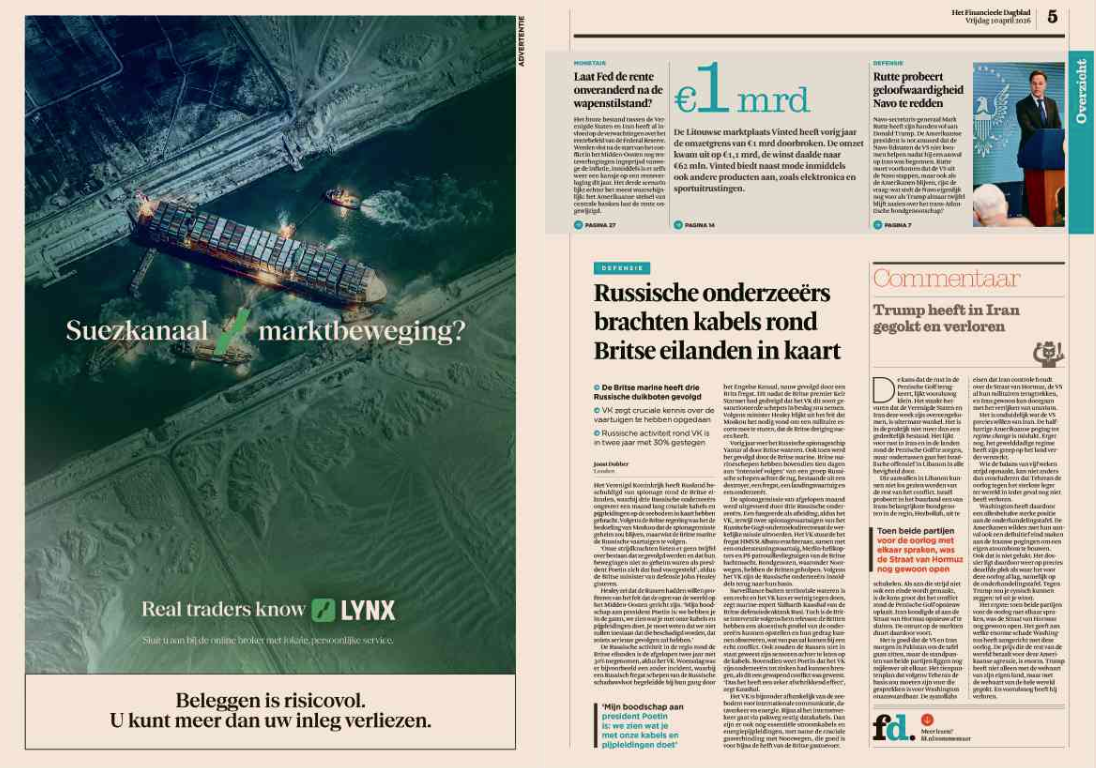
I brought compliance into the design process instead of after it. The title-driven concept collided with rules on risk-warning prominence, and the practical output was a set of typographic rules for what “predominant” means at each format size.
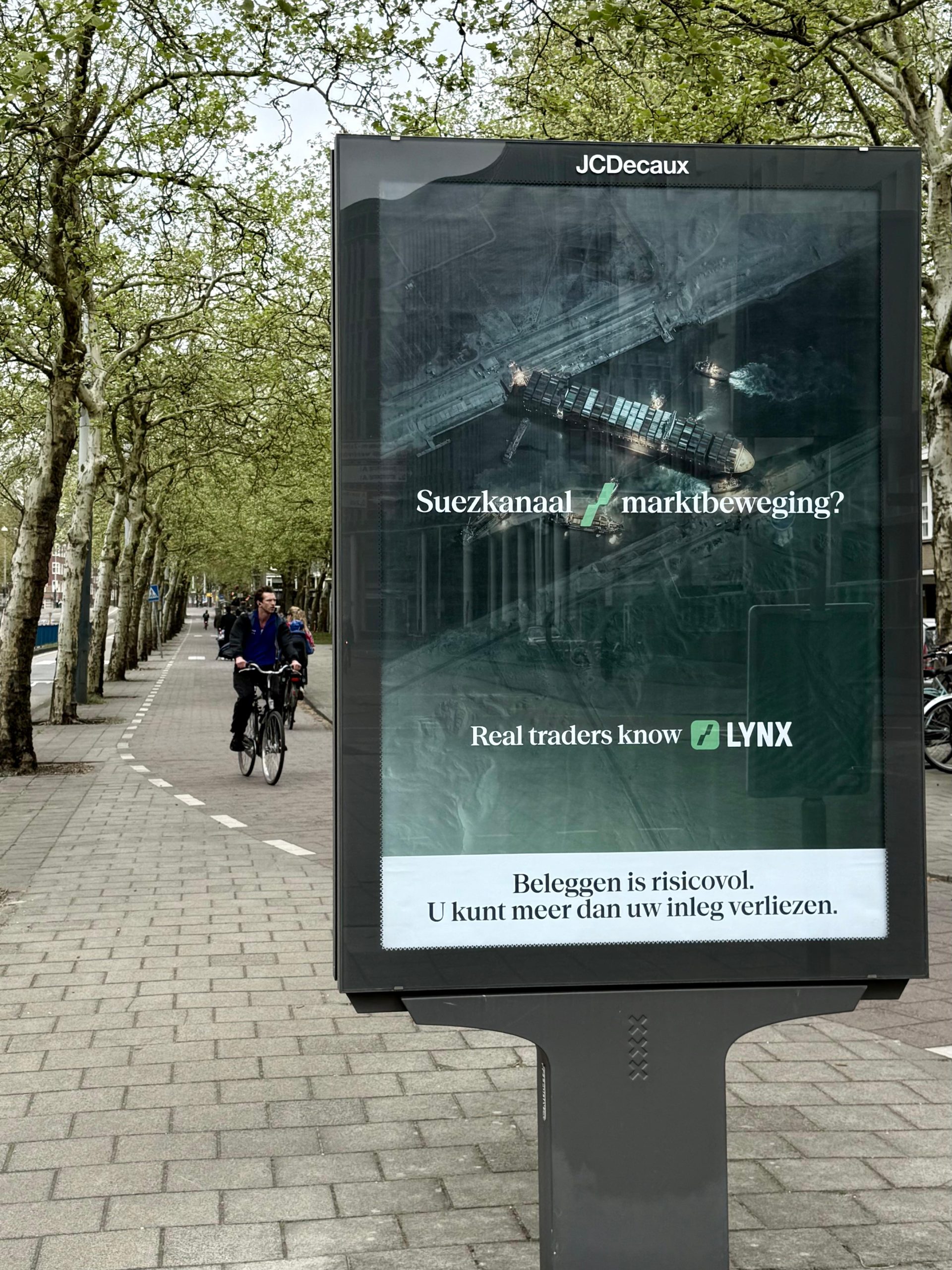
I directed the format translation for display, out-of-home and social, where the film’s pacing and palette do not survive intact, and set up in-house adaptation so LYNX designers can rework weak scenes for later flights instead of re-briefing production.
I built the effectiveness readout: campaign study, media results and creative critique in one retrospective, presented to the agency and internal stakeholders in June.
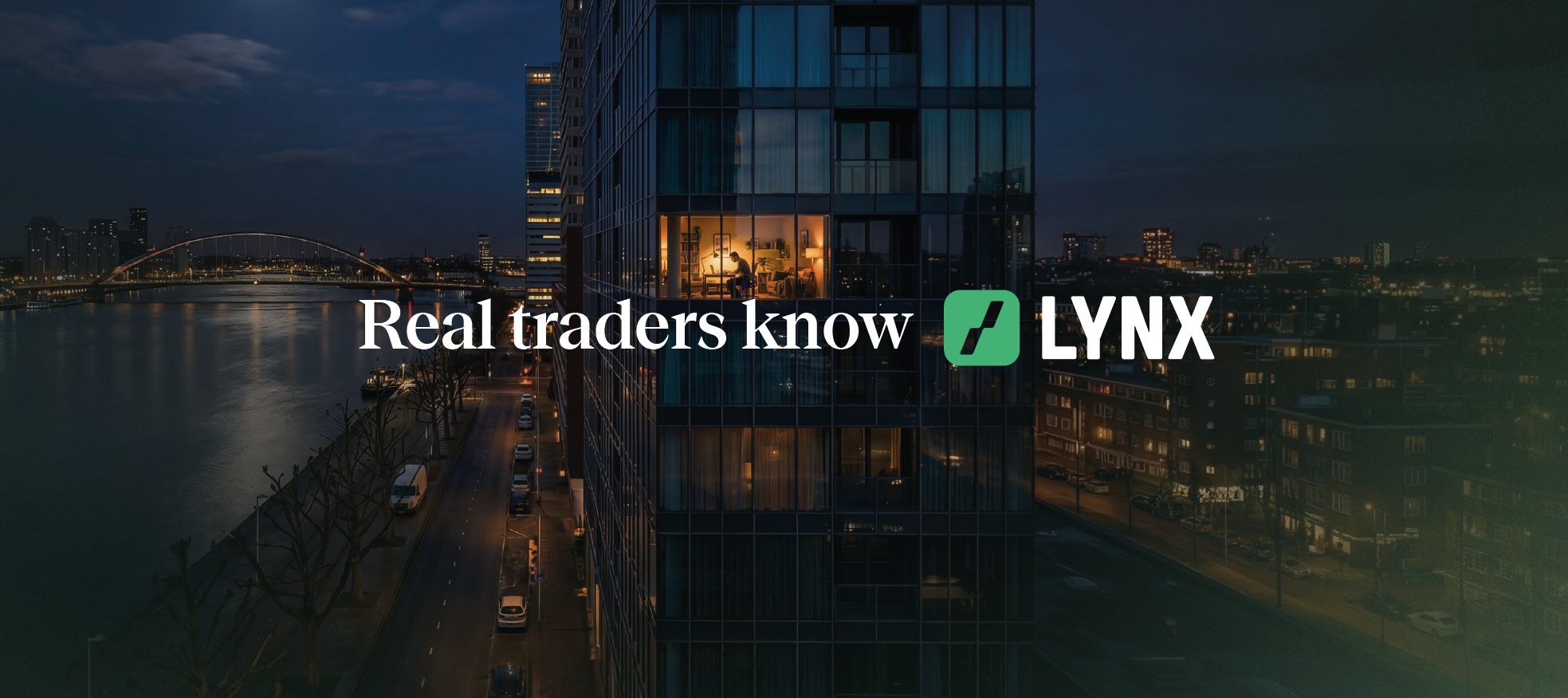
The film was made with AI-generated imagery, directed and prompted by Arthur Mebius with retouching by Jan Daniel Wolters. This is worth naming because it changed the review process. Instead of approving a shoot, we were approving a probability distribution of shots, and the failure mode shifted from “wrong take” to “uncanny detail.”